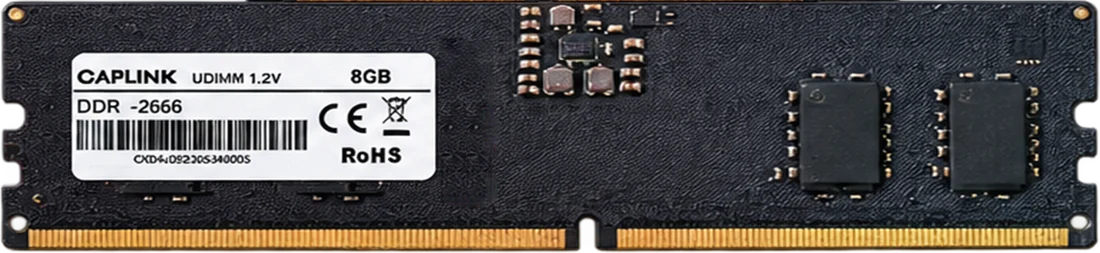
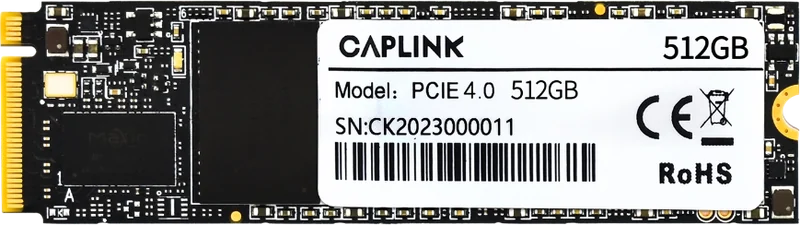
Memory and storage look like commodities: a capacity, a speed, a price. In reality, two drives with identical labels can use different controllers, NAND grades and firmware, and perform very differently after six months in the field. For OEM and private-label programs, where your brand carries the warranty, the sourcing process is what protects your margins and reputation.
This checklist summarises what experienced buyers verify before committing to volume orders of SSDs, DDR modules, memory cards and USB flash drives.
1. Write a complete specification, not just a capacity
Define every parameter that matters to your customers: form factor, interface, capacity, sequential and random performance targets, NAND type (TLC or QLC), DRAM cache or DRAM-less, endurance (TBW), operating temperature range and firmware features. For memory, specify generation, speed, voltage, rank, chip organization and whether modules must be ECC. A vague request invites a quote built on the cheapest possible configuration.
2. Confirm component source and grade
NAND and DRAM are sold in different grades. Original-grade chips from the major manufacturers perform to specification; downgraded, recycled or re-marked parts may pass a quick test but fail early. Ask which chip brands are used, whether they are original grade, and request photos or sample units you can open and inspect.
3. Lock the bill of materials
Component substitution is one of the biggest risks in storage sourcing. A supplier may ship a first batch with one controller and NAND combination, then quietly switch to another when prices move. Agree in writing that the controller, NAND, DRAM and PCB design are fixed for your SKU, and that any change requires advance notice and re-approval of samples.
4. Validate compatibility on your platforms
Provide the exact motherboards, laptops or embedded boards your customers use, and ask for a compatibility list (QVL) or test report on those platforms. For memory, this means boot, stress and speed tests at the rated profile; for SSDs, detection, boot, sleep/resume and sustained-write behaviour.
5. Ask how every unit is tested
Sample testing catches systematic problems; 100% testing catches individual weak units before they ship. Ask whether each DDR module goes through burn-in, whether each SSD runs a full-capacity write/verify, and what the failure threshold and retest policy are. On receiving samples, run your own checks:
- Memory: MemTest86 for several passes at the rated speed.
- SSDs, cards and USB drives: a full-capacity write and verify with H2testw (Windows) or F3 (Linux/macOS) to detect fake capacity, plus CrystalDiskInfo to read SMART data and firmware version.
6. Check certifications and compliance for your markets
Typical requirements include CE and RoHS for Europe, FCC for the United States and REACH for chemical substances, along with the WEEE marking where it applies. Ask for the test reports themselves, check that the product and company names on the report match what you are buying, and confirm whether reports cover your private-label model or only the supplier's own.
7. Plan labelling, packaging and firmware customisation
Private-label programs usually cover the product label, retail box, inserts and barcodes. Some suppliers can also customise the drive model string that the operating system displays, serial-number formats and SMART attributes. Confirm artwork deadlines, the proofing process and whether custom packaging changes the MOQ or lead time.
8. Understand MOQ, lead time and price validity
NAND and DRAM prices move with the global market, sometimes sharply within a quarter. Quotes therefore carry short validity periods. Clarify the MOQ per SKU and per custom design, standard and peak-season lead times, and whether long-term agreements or forecast-based orders can stabilise pricing.
9. Agree on Incoterms and logistics
Under FOB, the supplier delivers the goods onto the vessel at the port of origin and you manage freight, insurance, import clearance and duties. Under DDP, the supplier delivers to your door with duties paid, which simplifies landed cost but usually carries a higher unit price. Also confirm ESD-safe packaging, carton labelling, and how shipments are split by lot for traceability.
10. Put warranty, RMA and traceability in writing
Define the warranty period, how claims are submitted (photos, serial and lot numbers), turnaround time, and whether failed units are replaced, repaired or credited. Lot traceability, linking each finished module or drive to its component batches, lets both sides find root causes quickly instead of arguing over individual units.
Red flags to watch for
- Prices far below the market for the same capacity and interface.
- Reluctance to name the controller or NAND brand, or to lock the BOM.
- Samples that differ from production units, or batches with inconsistent labels and serial formats.
- Certificates that name a different product or company.
- No clear RMA process or lot numbers on the product.
A practical sampling timeline
- Share the specification and target volume; receive a quotation and BOM summary.
- Receive engineering samples and test them on your own platforms.
- Approve the golden sample and artwork; freeze the BOM.
- Run a pilot batch, check it against the golden sample, then scale to volume production.
UNITRENTH supports OEM and private-label programs for DDR memory, SSDs, memory cards and USB flash drives, with volume pricing tiers, custom SKUs and labeling, module-level burn-in and lot traceability. Send us your target specification and volume and we will reply with a quote within two business days.
Frequently asked questions
What is a typical MOQ for private-label SSDs or memory?
It depends on the product, capacity and how much of the label, packaging and firmware is customised. Standard products with custom labels usually have lower MOQs than fully custom designs, so share your target volume when requesting a quote.
How can I detect fake-capacity flash storage?
Run a full-capacity write and verify test with a tool such as H2testw on Windows or F3 on Linux and macOS. The test fills the drive with data and checks that all of it can be read back correctly.
What is the difference between FOB and DDP?
With FOB the buyer takes over costs and risk once goods are loaded at the origin port, and handles freight and import duties. With DDP the seller delivers to the buyer's address with duties paid.
Why do memory and SSD quotes expire so quickly?
DRAM and NAND flash prices follow global supply and demand and can change significantly within weeks, so suppliers limit how long a quoted price is valid.
Need a quote or samples?
Tell us your platform, volume and timeline — we reply within two business days.
Get a quote → View products